And here’s the twist that will have your taste buds dancing: I’ve added a splash of tomato paste early in the cooking process, which deepens the tomato flavor and gives the soup a silky texture that’s impossible to resist. The result is a soup that feels like a comforting blanket on a cold day, yet is bright and fresh enough to lift your spirits. Picture yourself pulling this out of the oven, the whole kitchen smelling incredible, and knowing you’ve just created something that will become a family favorite.
Let me walk you through every single step — by the end, you’ll wonder how you ever made it any other way. I dare you to taste this and not go back for seconds. Stay with me here — this is worth it.
What Makes This Version Stand Out
- Taste: The combination of fresh vegetables, ground meat, and tomato paste creates a layered flavor profile that is both comforting and complex. The soup’s savory base is brightened by the acidity of diced tomatoes, while the paprika adds a subtle smokiness that lingers on the palate. This balance turns a simple soup into a culinary experience.
- Texture: Shredded cabbage and diced vegetables provide a satisfying bite, while the rice absorbs the broth, becoming tender yet distinct. The ground meat remains juicy, offering a protein-packed mouthfeel that feels hearty without being heavy. The result is a soup that feels like a hug in a bowl.
- Simultaneity: The recipe requires minimal hands‑on time, making it ideal for busy evenings. Once the ingredients are in the pot, the soup simmers, allowing you to focus on other tasks while the flavors develop. This makes it a perfect weeknight dinner or a comforting weekend meal.
- Uniqueness: The early addition of tomato paste and the use of ground meat instead of traditional rolled cabbage give this soup a modern twist on a classic dish. It’s a bridge between nostalgia and contemporary taste, making it stand out in any potluck lineup.
- Ingredient Quality: Fresh, organic produce and lean ground meat elevate the dish beyond a standard canned soup. The quality of each component is reflected in the final flavor, ensuring that every spoonful is full of life.
- Make‑ahead Potential: The soup can be prepared ahead of time, allowing flavors to deepen overnight. When reheated, the dish retains its texture and taste, making it an excellent option for meal prep enthusiasts.
Inside the Ingredient List
Flavor Base
Onion: The onion is the sweet, aromatic foundation of the soup. When sautéed until translucent, it releases a natural sugar that caramelizes just enough to add depth without overpowering the dish. If you skip it, the soup will feel flat and lacking that comforting base.
Garlic: Garlic adds a punch of aroma that elevates every other component. Its sharpness cuts through the richness of the ground meat and balances the sweetness of the carrots. Skipping garlic would leave the soup tasting like it’s missing a secret ingredient.
Diced Tomatoes: The diced tomatoes provide acidity that brightens the soup and balances the richness of the meat and broth. Their natural sugars also help to caramelize the vegetables during cooking. If you omit them, the soup becomes too heavy and loses its bright undertone.
The Texture Crew
Carrot: Carrots contribute a gentle sweetness and a vibrant color that makes the soup visually appealing. Their natural sugars help to caramelize when sautéed, adding a subtle depth. Without carrots, the soup feels less colorful and the flavor profile becomes less rounded.
Green Bell Pepper: The bell pepper introduces a crisp bite and a slightly bitter note that balances the sweet vegetables. Its bright green hue also adds a pop of color, making the soup more appetizing. Removing it can make the dish feel less lively.
Cabbage: Cabbage is the star, providing heartiness and a satisfying crunch. When shredded finely, it absorbs the broth and becomes tender yet distinct. If you skip cabbage, the soup loses its traditional identity and becomes just another vegetable stew.
The Unexpected Star
Ground Beef or Turkey: The ground meat adds protein and richness, transforming the soup from a simple vegetable broth into a filling meal. Ground turkey offers a leaner option, while beef brings a deeper flavor. Omitting the meat turns the soup into a light, vegetarian dish that’s still delicious but less substantial.
The Final Flourish
Rice: Rice acts as a subtle binder, soaking up the broth and adding a comforting, almost nostalgic texture. It also helps thicken the soup slightly, giving it body. If you skip rice, the soup becomes more liquid, which may not be ideal for those who prefer a thicker consistency.
Broth: Broth is the liquid canvas that brings all the flavors together. A good quality broth provides depth, while a low-sodium version keeps the dish balanced. Skipping broth would result in a dry, concentrated sauce that isn’t suitable for a soup.
Tomato Paste: Tomato paste is the secret to a silky, rich base. It concentrates the tomato flavor and helps thicken the soup without adding bulk. If you skip it, the soup will lack depth and silky texture.
Spices (Thyme, Paprika, Salt, Black Pepper): The spices create a warm, aromatic profile that ties the dish together. Thyme offers herbal depth, paprika adds smokiness, salt balances flavors, and black pepper gives a subtle heat. Without these spices, the soup would taste bland and incomplete.
Everything’s prepped? Good. Let’s get into the real action.
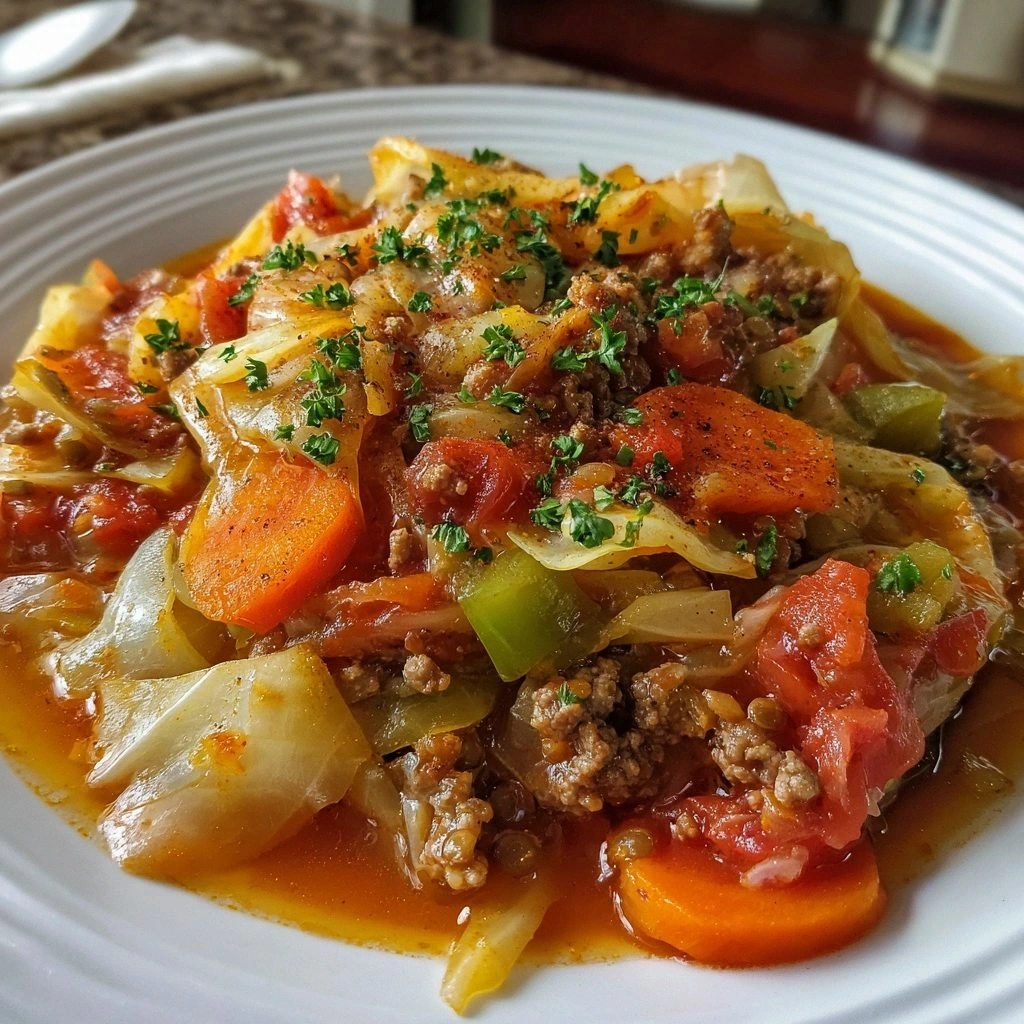
The Method — Step by Step
- Heat a large pot over medium heat and add a splash of olive oil. Once the oil shimmers, add the diced onion and sauté until translucent, about 5 minutes. The onion should soften without browning, releasing its sweet aroma. This step lays the foundation for the soup’s flavor. Keep the heat moderate to avoid burning the onion.
- Add the minced garlic and cook for 1 minute, stirring constantly to prevent sticking. The garlic should release a fragrant steam that fills the kitchen. Be careful not to let it brown, as burnt garlic can introduce bitterness. This quick sauté intensifies the soup’s depth. The garlic’s aroma should mingle with the onions.
- Stir in the diced carrots, green bell pepper, and shredded cabbage. Cook for 4–5 minutes until the vegetables start to soften. The colors should brighten, giving the soup a vibrant appearance. This mixture ensures a balanced texture. The vegetables should be tender but still retain a slight bite.
- Add the ground beef or turkey, breaking it up with a spoon. Cook until browned and no longer pink, about 8 minutes. The meat should develop a rich brown crust, adding depth. This browning reaction is key to flavor. The meat’s juices should mix with the vegetables, forming a savory base.
- Stir in the tomato paste, ensuring it’s fully incorporated. The paste should coat the meat and vegetables, turning the mixture a deep, rich hue. This step is crucial for a silky texture. The paste should not burn; keep the heat moderate. The mixture should smell toasty, indicating the paste has cooked through.
- Pour in the broth and diced tomatoes, then bring the mixture to a gentle simmer. Add thyme, paprika, salt, and pepper, stirring to combine. Let the soup simmer for 20 minutes, uncovered, allowing the flavors to meld. The broth should thicken slightly, and the vegetables should be tender. This is the moment of truth; the soup should look inviting.
- Add the rice and cook for an additional 15 minutes, or until the rice is tender and has absorbed most of the liquid. Stir occasionally to prevent sticking. The rice should become fluffy, not mushy. The soup’s consistency should be hearty but not thick. The rice absorbs the flavors, creating a comforting bite.
- Taste the soup and adjust seasoning as needed. Add more salt, pepper, or paprika for a kick. The soup should be balanced, with a hint of acidity from the tomatoes and a gentle heat from the spices. Serve hot, optionally garnished with fresh herbs or a dollop of sour cream. The final dish should feel like a comforting hug in a bowl.
That’s it — you did it. But hold on, I’ve got a few more tricks that will take this to another level.
Insider Tricks for Flawless Results
The Temperature Rule Nobody Follows
Many cooks start with high heat, but this can cause the broth to evaporate too quickly, leaving a concentrated, bitter base. Instead, begin with medium heat, letting the soup gently simmer. This preserves the subtle flavors of the vegetables and meat. A slow simmer also allows the rice to absorb liquid evenly. I’ve seen this trick turn a mediocre soup into a masterpiece.
Why Your Nose Knows Best
Smelling the soup at different stages can guide your seasoning decisions. When the tomato paste is cooked, it should smell caramelized and slightly sweet. As the broth simmers, the aroma should become earthy and savory. If it feels flat, add a pinch of salt or more paprika. Your nose is the ultimate flavor detector.
The 5-Minute Rest That Changes Everything
After removing the soup from heat, let it rest for 5 minutes before serving. This brief pause allows the flavors to settle and the rice to finish absorbing liquid. It also gives the spices a chance to bloom fully. A rested soup tastes richer and more cohesive. Skip this step, and you’ll miss the subtle depth.
Don’t Let the Rice Stick
Stirring the rice at the beginning helps prevent clumping. If you notice sticking, add a splash of water or broth to loosen the grains. The rice should remain separate and fluffy. This small adjustment keeps the soup from becoming mushy.
Use a Slow Cooker for Effortless Flavor
Transfer the ingredients into a slow cooker on low for 6–7 hours. The slow, low heat allows the flavors to meld deeply, creating a soup that’s practically ready. When using a slow cooker, add the rice in the last hour to prevent overcooking. This method is perfect for busy weekdays.
Garnish for Extra Flair
Top the soup with a swirl of sour cream, a sprinkle of fresh parsley, or a pinch of smoked paprika. These finishing touches add color, texture, and a final burst of flavor. A garnish also makes the dish look more appealing. The small details elevate the overall experience.
Creative Twists and Variations
This recipe is a playground. Here are some of my favorite ways to switch things up:
Smoky Chipotle Cabbage Roll Soup
Swap paprika for chipotle powder and add a teaspoon of adobo sauce. The smoky heat gives the soup a bold, Southwestern vibe. This version pairs wonderfully with a dollop of guacamole.
Lemon‑Herb Twist
Add a squeeze of fresh lemon juice and a handful of chopped dill at the end. The citrus brightens the soup, while dill adds a fresh herbal note. This variation is perfect for springtime.
Vegetarian Lentil Version
Replace the ground meat with cooked lentils and use vegetable broth. The lentils add protein and a hearty texture. This version is both healthy and comforting.
Spicy Mexican Cabbage Soup
Introduce cumin, coriander, and a dash of cayenne pepper. Finish with a topping of shredded cheese and a spoonful of salsa. The result is a fiesta in a bowl.
Asian‑Inspired Cabbage Soup
Use soy sauce, ginger, and a splash of sesame oil. Add sliced mushrooms and tofu for extra protein. This fusion version offers a savory, umami flavor profile.
Low‑Carb Cabbage Soup
Omit the rice and add cauliflower rice instead. The cauliflower absorbs the broth and keeps the soup low in carbohydrates. This version is great for keto or low‑carb diets.
Storing and Bringing It Back to Life
Fridge Storage
Cool the soup completely before transferring it to an airtight container. Store in the refrigerator for up to 5 days. The flavors will deepen slightly, making the soup even more delicious.
Freezer Friendly
Cool the soup and then portion it into freezer‑safe containers. Freeze for up to 3 months. When ready to eat, thaw overnight in the refrigerator before reheating.
Best Reheating Method
Reheat gently on the stove over low heat, adding a splash of water or broth if needed. Stir occasionally to prevent sticking. Add a tiny splash of water before reheating — it steams back to perfection and keeps the soup silky.